

 Instagram
 Tiktok
 Facebook
 Linkedin
 Threads
 Youtube
 Tripadvisor
 Spotify


The Felícia Leirner Museum, an institution of the São Paulo State Secretariat of Culture, Economy and Creative Industry, managed by ACAM Portinari – Cultural Organization, was inaugurated in 1979 and officially established in 2001 by State Decree No. 46,466.
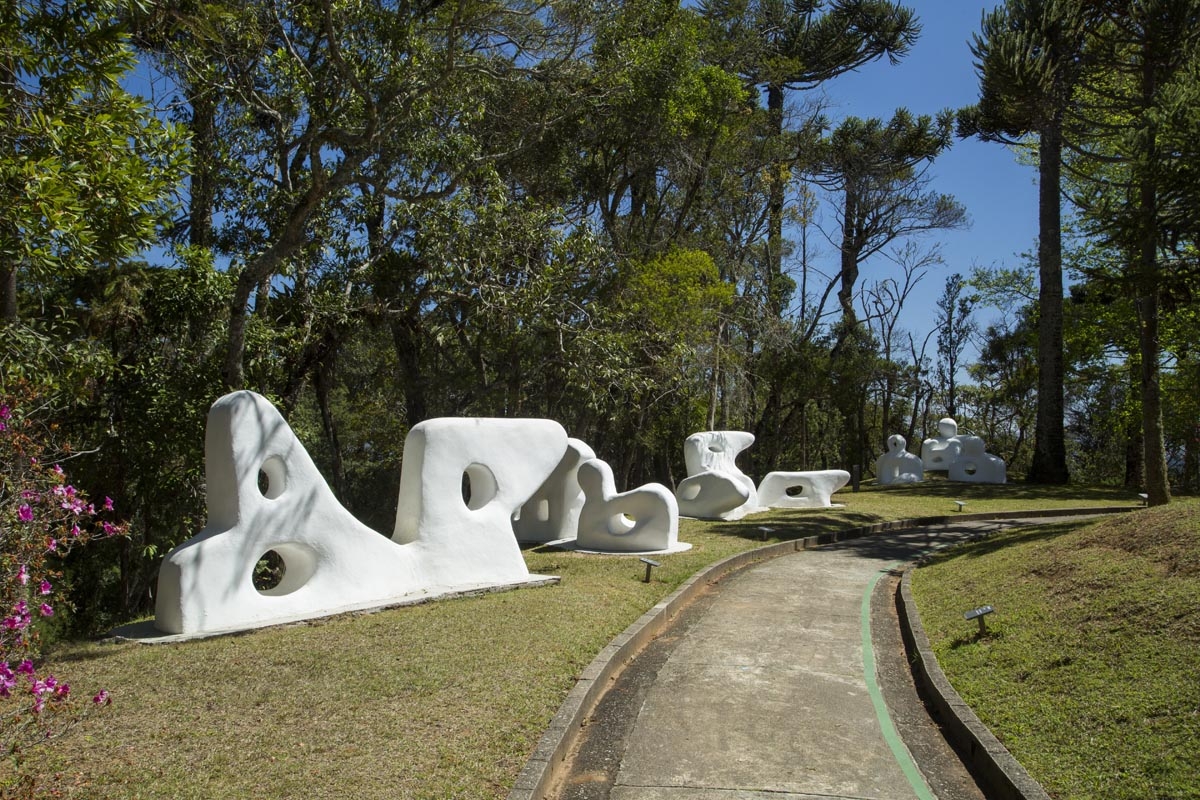
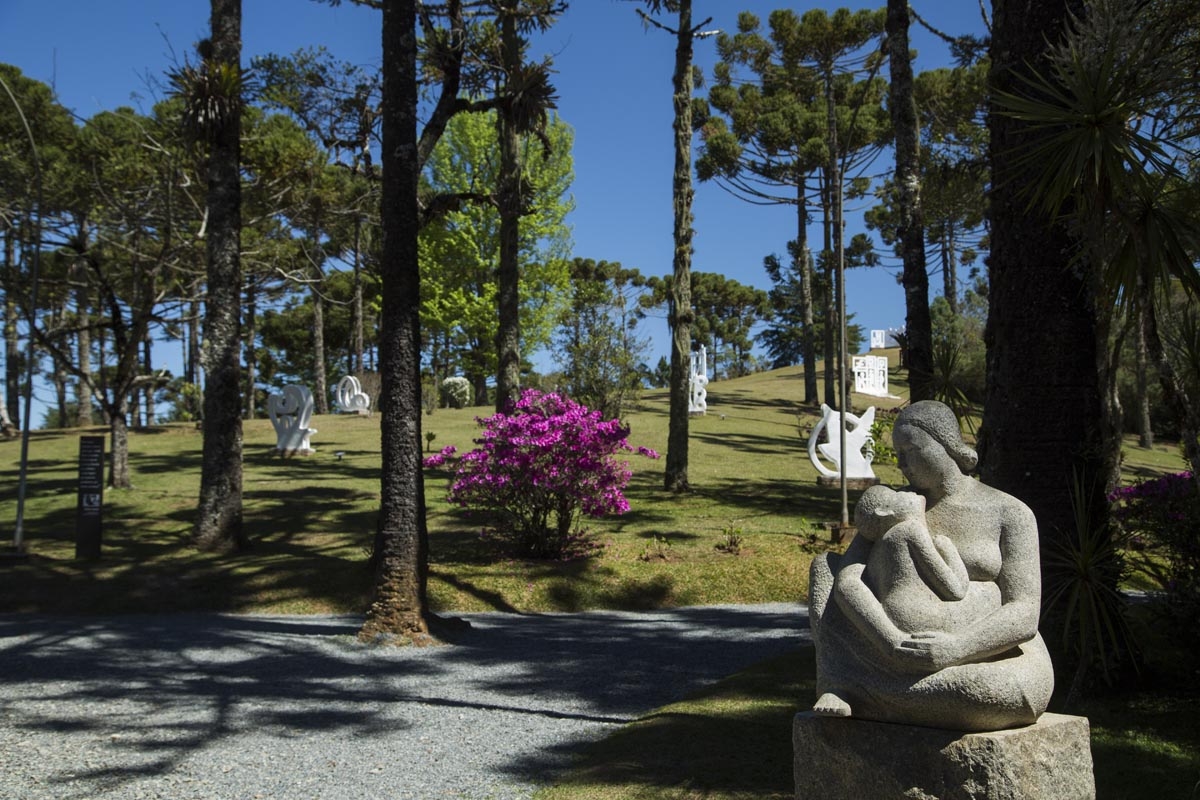
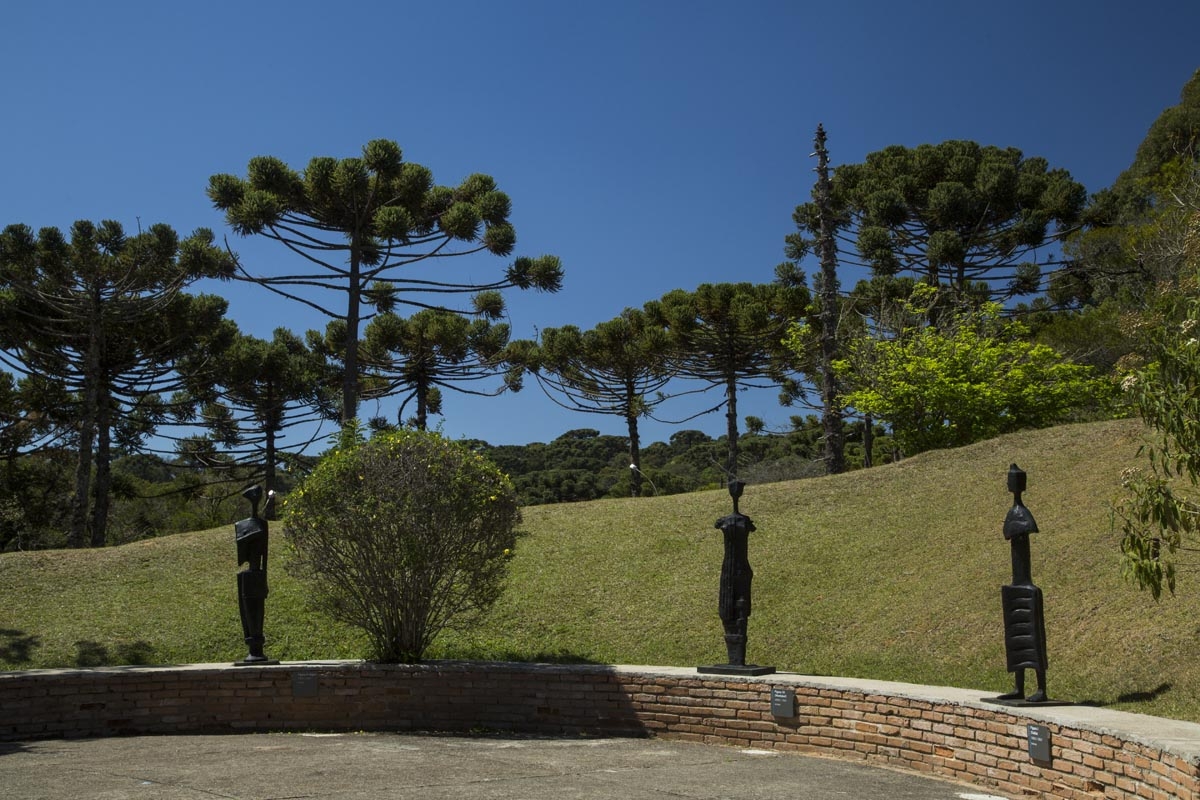
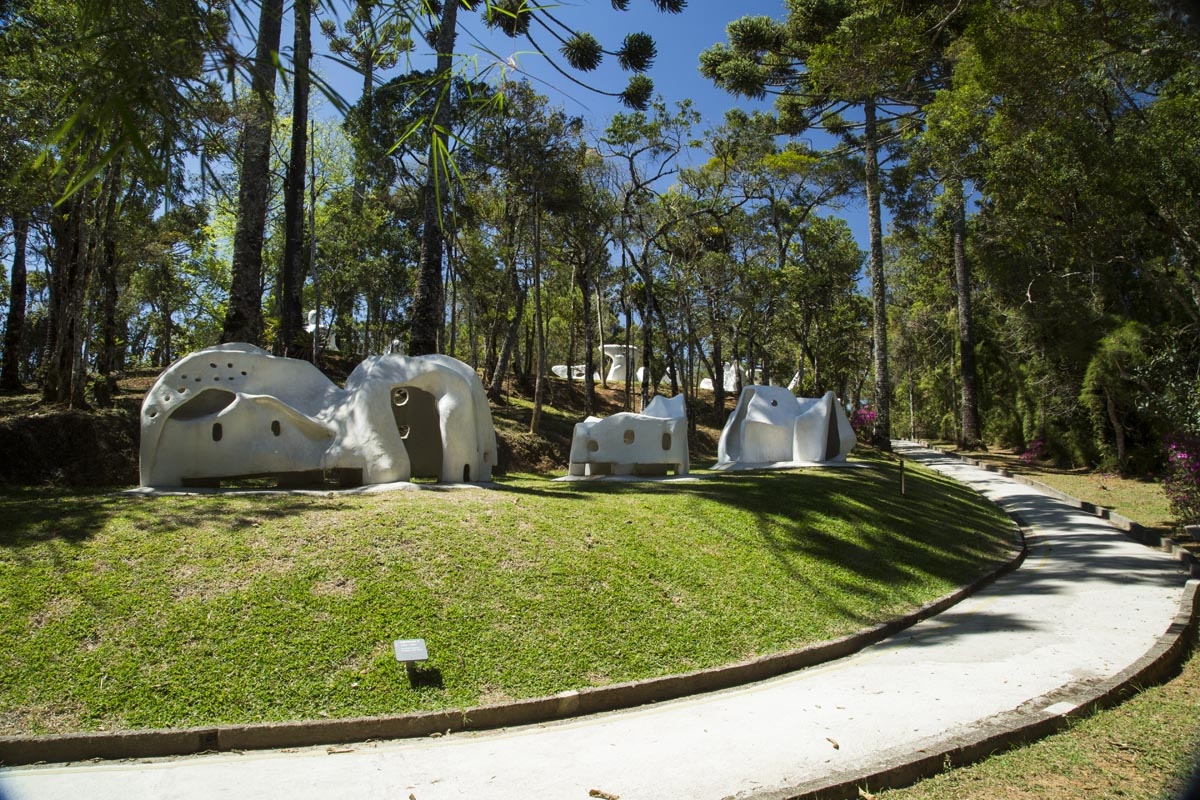
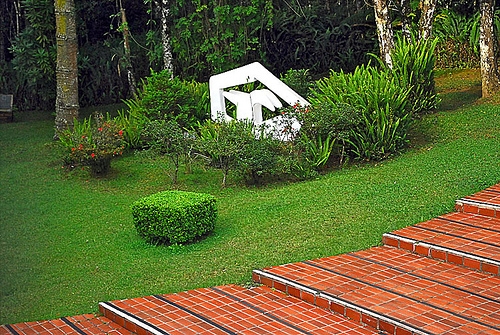
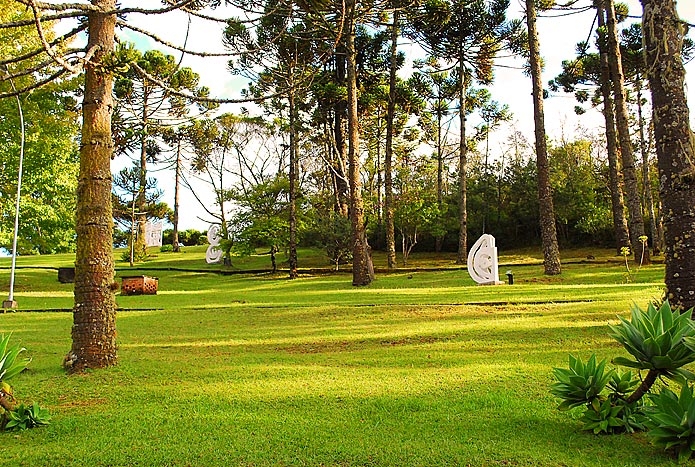
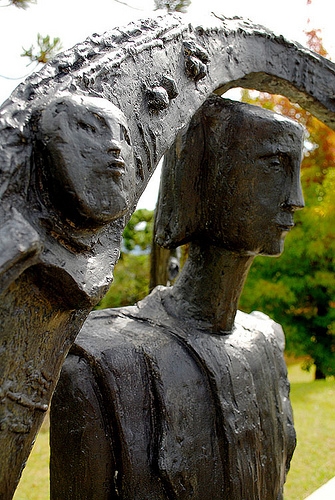
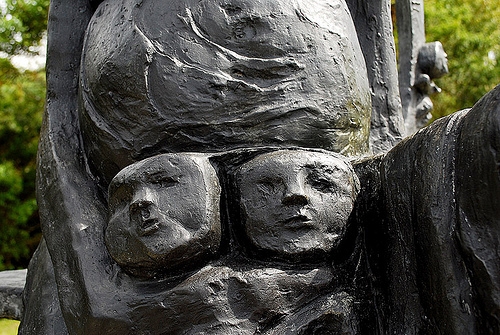
Located in Campos do Jordão, within a 35,000-square-meter forested area, the museum houses a collection of 88 works by artist Felícia Leirner, made of bronze, white cement, granite, and plaster. The sculptures are displayed outdoors throughout the gardens of the site, which it shares with the Claudio Santoro Auditorium, home to the International Winter Festival.
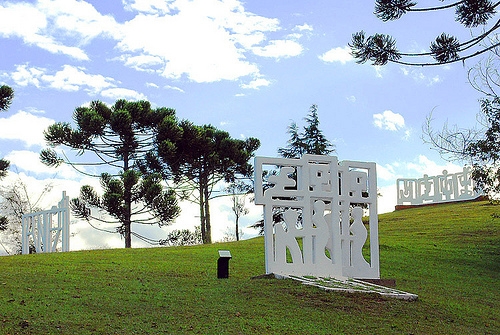
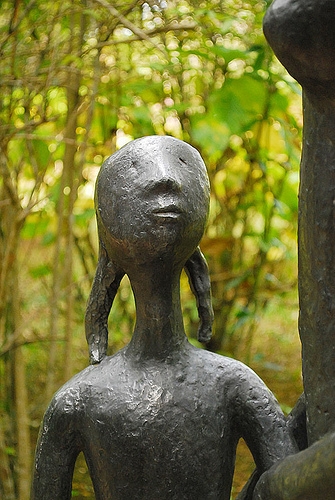
The works are arranged according to the artist’s own criteria and grouped according to different phases of Felícia Leirner’s artistic career: Figurative (1950–1958), Towards Abstraction (1958–1961), Abstract (1963–1965), Organic (1966–1970), and Landscape Cutouts (1980–1982).
The collection reflects the artist’s passion for nature and for the site itself, which was recognized as one of the most important spaces of its kind in the world by Sculpture magazine, published by the International Sculpture Center in Washington, D.C., USA, in 1987..
Mission
The Felícia Leirner Museum and Claudio Santoro Auditorium are committed to preserving, researching, and communicating their sculpture collection; promoting engagement with and expression through the visual arts, particularly sculpture; fostering the appreciation, understanding, and expression of music; preserving the vegetation of the gardens, which is intrinsically connected to the sculpture collection, as well as the adjacent area of Atlantic Forest; and promoting environmental conservation, contributing to the creation of dialogues and bridges to knowledge..
Vision
The Felícia Leirner Museum aims to become a national and international reference among museums that bring together cultural and natural heritage in the same space, while establishing itself as a relevant center for the promotion of visual arts, particularly sculpture, music, and environmental sustainability, with a focus on social well-being in its management and services.
Values
- Safeguarding and communicating cultural and natural heritage with responsibility and quality.
- Respect for life and for all people, regardless of individual characteristics.
- Responsibility for human development and the promotion of diversity and inclusion.
- Commitment to local and global environmental sustainability.
- Quality management based on valuing professionals and other social stakeholders involved in its processes, in pursuit of the institution’s mission and vision.
- Ethics, efficiency, and transparency in the use of public and private resources.








Felícia
Leirner
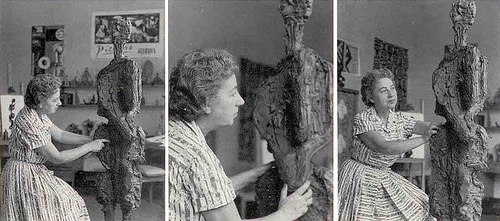
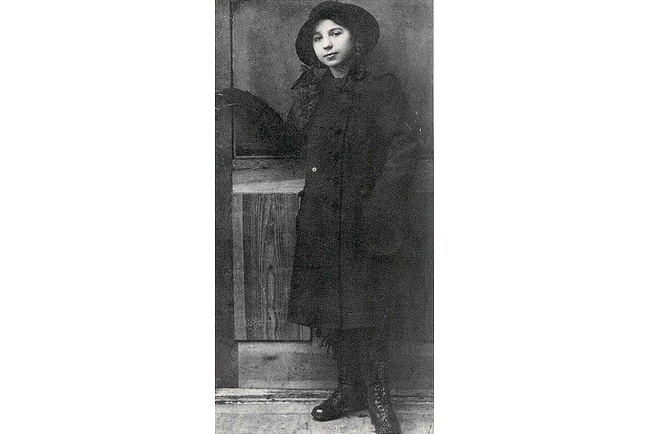
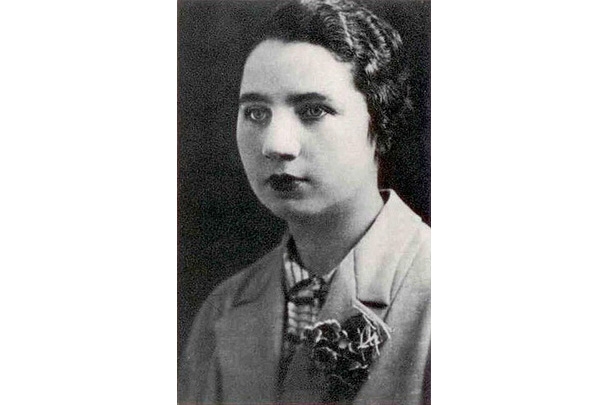
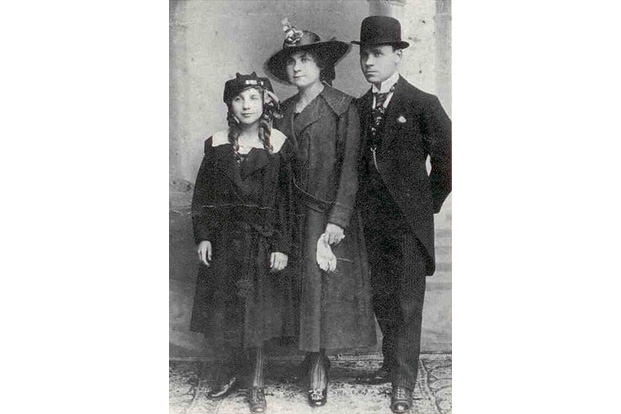
Felícia Leirner was born in Warsaw, Poland, in 1904. She moved to Brazil in 1927 and, in 1962, left the city of São Paulo for Campos do Jordão, seeking a life closer to nature.
In 1978, Felícia intensified her artistic practice and inaugurated the Felícia Leirner Museum. In 1982, she completed the body of work created for the Museum.
“What I do is arrange, rearrange, cut, join, fix, pierce paper, fabric—everything within my reach, arranging, rearranging, modifying. And then, what was it worth? It was worth what I felt and changed.“. – Felícia Leirner
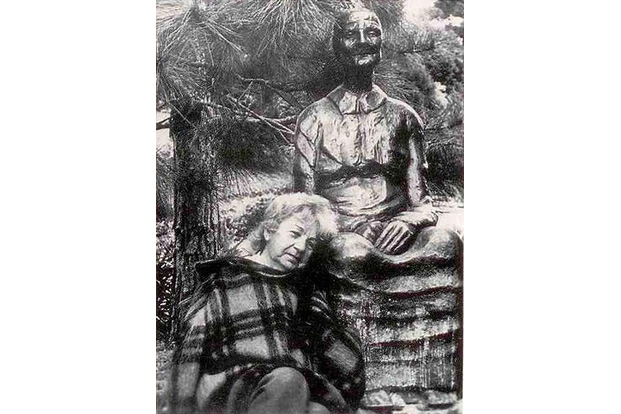
At home, she continued to occupy herself with embroidery, drawing, and writing, as well as creating smaller pieces in clay that were later cast in bronze, most of them in the shape of birds. Felícia Leirner died in 1996, at the age of 92, at her home in São Paulo.
After donating several of her works, the sculptor became permanently connected to the history of Campos do Jordão and Brazilian visual arts.
Among her most notable awards and achievements were the Acquisition Award from the Museum of Modern Art of Rio de Janeiro in 1955 and the award for Best Brazilian Sculptor at the São Paulo Biennial in 1963. In 1957, her sculptures were added to the collections of the São Paulo Museum of Art (MASP) and the Musée d’Art Moderne de Paris (Centre Georges Pompidou), in France.
Her works were also acquired by other international collections, including the Hermitage Museum in Russia, the Royal Museums of Fine Arts of Belgium, the Ein Hod Artists’ Village in Israel, and the Moderna Galerija in Belgrade, Serbia.




Cronologia
Felícia Leirner is born in the city of Warsaw, Poland.
He migrates to Brazil, a country he adopts as a homeland.
At the age of 44, he began his sculpture studies with renowned artist Victor Brecheret.
His first works belong to the Figurative phase.
It confirms his importance as an artist when he participates in the international biennials of São Paulo. In 1955 she was awarded the Acquisition Award from the Museum of Modern Art in Rio de Janeiro. At that time, his work obtained important national and international recognition.
His sculptures are incorporated into the collections of the São Paulo Museum of Art (MASP) and the Museum of Modern Art in Paris, followed by other important museums in Europe, such as the Stedelijk Museum in Amsterdam and the Tate Gallery, in London, which also add Felícia’s works to her collections.
Already established, he enters a new stage of his art and his works become abstract.
Shaken by the early death of her husband Isai Leirner, she moves from São Paulo to Campos do Jordão, where she houses her sculptures until 1978, when they are transferred to the newly created Felícia Leirner Museum.
The “Cruzes” (1963) phase begins, followed by “Structures” (1964/1965). His work continues to be recognized in Brazil and abroad. In Biennials VIII, IX and X, he exhibits in Special Rooms. The Correio do Brasil newspaper issues a commemorative stamp for the 10th Biennial, choosing a sculpture by Felícia to illustrate it. Other world-renowned museums, such as the Hermitage (Russia), the Royale de Belgique (Belgium), the Ein-Hod (Israel) and the Modern Gallery of Belgrade, also host their works.
The Bienal de São Paulo grants the artist the award for Best Brazilian Sculptor.
Always in search of new forms and materials, he leaves clay, bronze, granite and begins to produce large pieces in white cement, aided by workers from the region. This is the starting point for the “Habitacles” phase (1966), in which one embarks on the territory of architecture, with habitable sculptures.
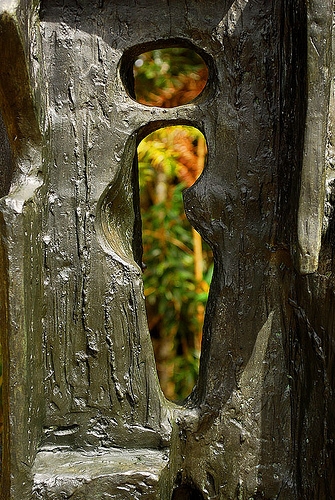
The “Bichos” phase begins, a curious and fantastic zoo in many ways. At the same time, he conceived a large ensemble dedicated to “Man and the Family”, a large work (almost 8 meters long by 3 meters high), also executed in granite, which is found in the gardens of the Palácio dos Bandeirantes seat of the Government of the State of São Paulo. He also started to execute the great “Columns”, full of cavities, where rainwater could accumulate and cool birds, animals for which he always showed special affection. Emblematic of this phase is the “São Francisco”, with open arms awaiting the visit of the birds.
His love for nature and Campos do Jordão came true with the creation of the Felícia Leirner Museum by the Government of the State of São Paulo. All the works of her authorship and her property were donated by the sculptor to the newly created museum.
Official opening of the Felicia Leirner Museum.
Felícia Leirner continues her work, producing works within the museum itself. It is the phase of the “Portals”, with cut, flat shapes, which are distributed over the landscape as enigmatic messages.
It frames a crooked tree in the garden with its sculpture. It is the end of his production at the museum. From that moment, he retired to his home in Campos do Jordão, where he continues to be distracted by his talents as always. Embroider, make rugs, draw and write. Felícia continued to produce smaller clay sculptures, which were later cast in bronze. Almost all of them depicted birds.
Felícia Leirner passes away at the age of 92, quietly, in her house of São Paulo.